




Probiotics 101: What They Are and Where to Find Them
You hear about probiotics everywhere, from yogurt cups to supplement aisles. Here is a plain-English guide to what they are, where they come from and how to read the label.
- Probiotics are live microorganisms that provide a health benefit when you get enough of them.
- Benefits depend on the specific strain and amount, so not all probiotics are the same.
- Fermented foods like yogurt and kefir are easy, tasty everyday sources.
What are probiotics?
The internationally accepted definition, from the World Health Organization and the International Scientific Association for Probiotics and Prebiotics, is "live microorganisms that, when administered in adequate amounts, confer a health benefit on the host."
Your gut is already home to trillions of bacteria, often called the gut microbiome. Probiotics are helpful microbes you get from food or supplements. Common groups include Lactobacillus, Bifidobacterium, Bacillus coagulans and the yeast Saccharomyces boulardii.
Probiotics vs. prebiotics
| Probiotics | Prebiotics | |
|---|---|---|
| What they are | Live beneficial microbes | Fibers that feed beneficial microbes |
| Where you find them | Yogurt, kefir, some cheeses, sauerkraut, kimchi, supplements | Onions, garlic, bananas, oats, asparagus, beans |
Eating both is a simple way to support a healthy gut. A yogurt smoothie with banana and oats covers both in one glass.
Why strains matter
Research on probiotics looks at specific strains in specific amounts. A benefit found for one strain doesn't automatically apply to another. That's why good products list their strains and how many live cultures they contain, usually as CFU (colony-forming units) or a probiotic count per serving.
Everyday food sources
- Yogurt labeled "live and active cultures"
- Kefir, a tangy fermented milk drink
- Some aged cheeses, such as Gouda and cheddar
- Fermented vegetables like sauerkraut and kimchi (the refrigerated, unpasteurized kind)
- Miso and tempeh
- Yogurt smoothie mixes made with live cultures
How to tell if a product really has probiotics
- Look for "live" cultures. Products that are heat-treated after fermentation may not contain live microbes.
- Check the strains. A list of named strains is a good sign.
- Check the amount. Look for a probiotic count per serving.
- Store and use it properly. Keep cold foods cold, and don't add live cultures to hot food or drinks.
What's in Pumjil
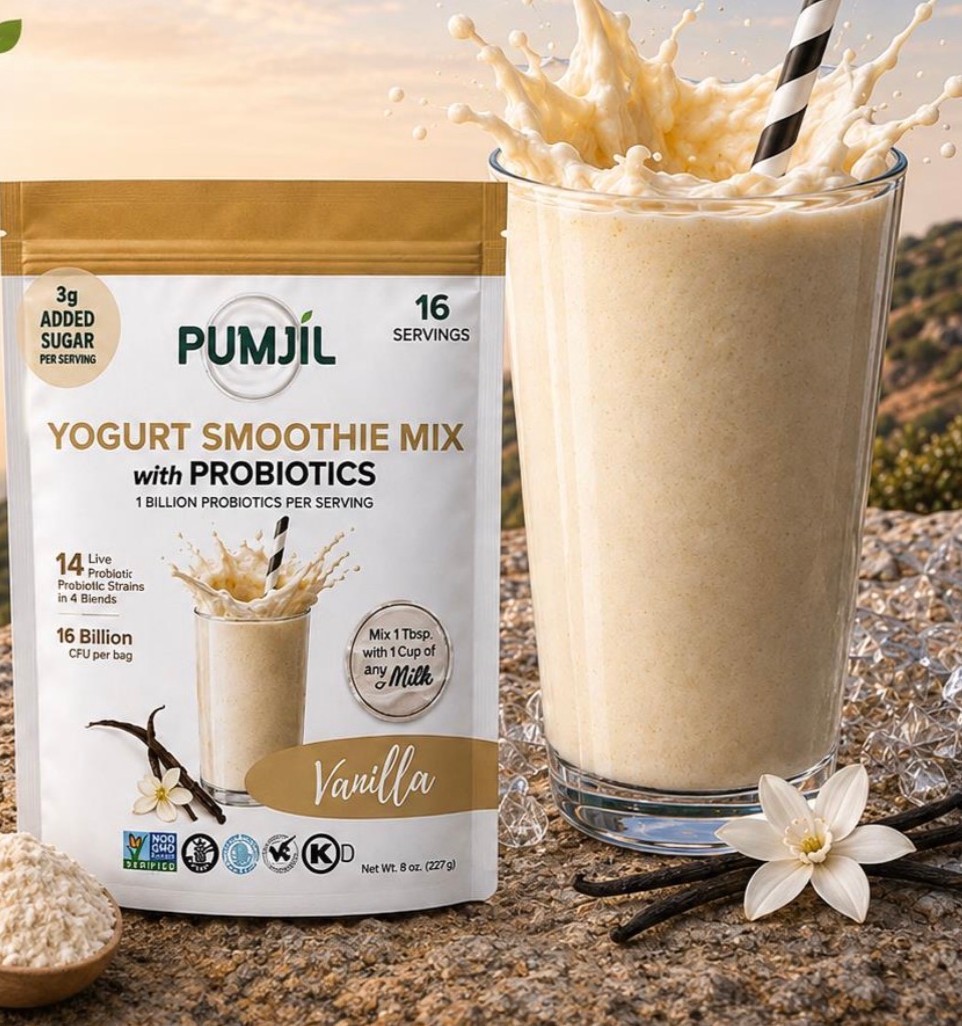
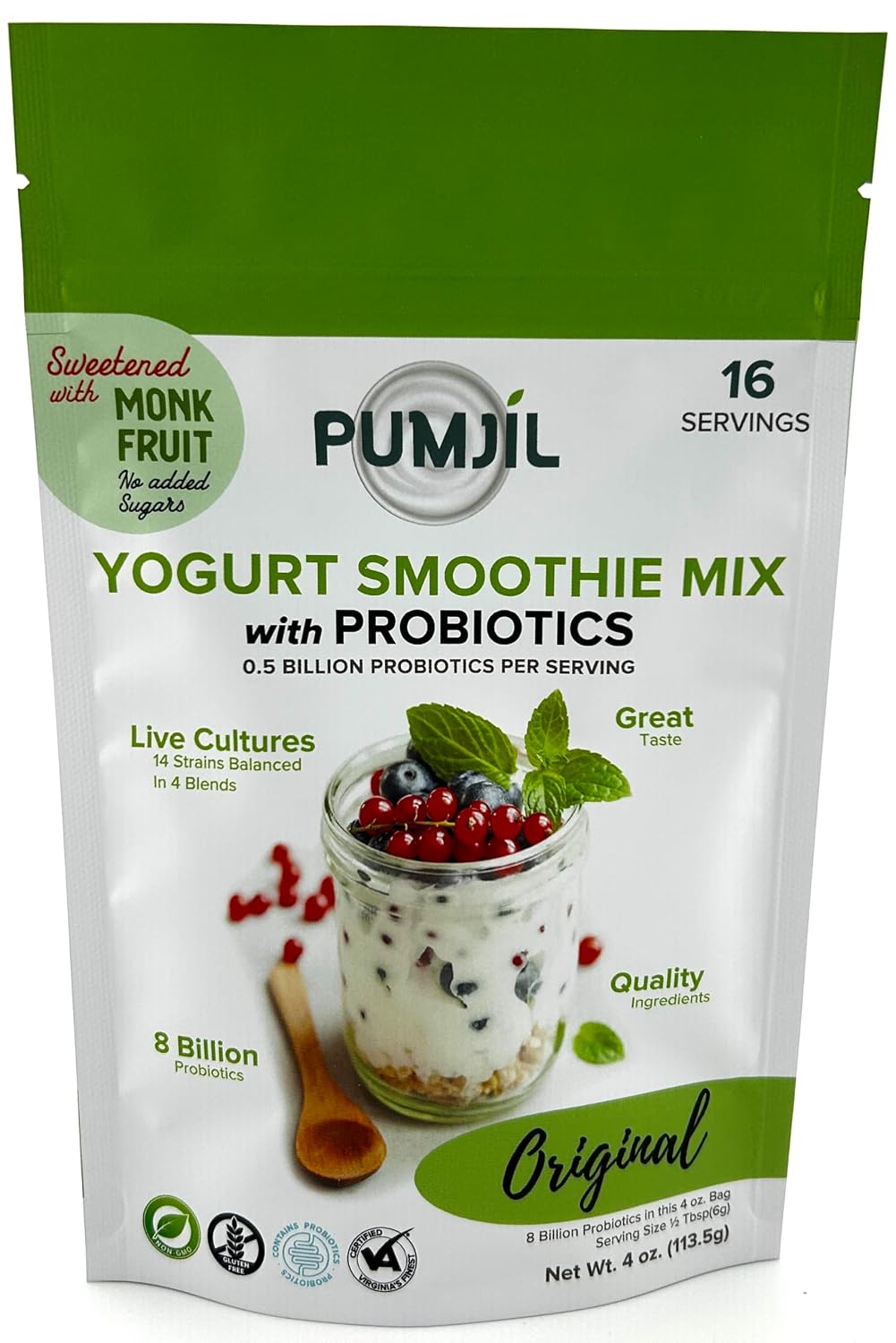
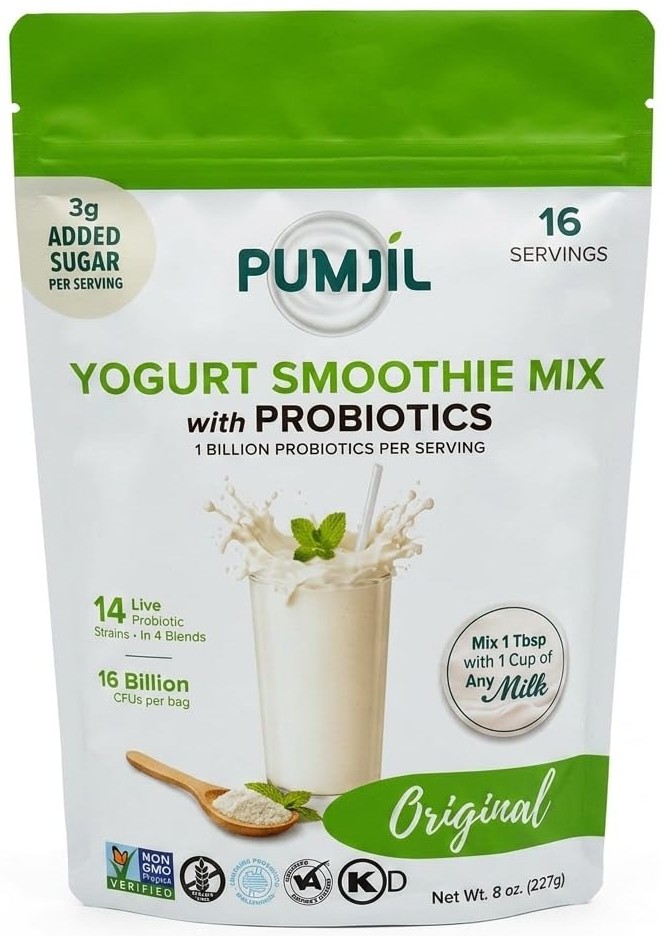
Every serving of Pumjil has up to 1 billion probiotics from 14 strains in four blends: a Lactobacillus blend, a Bifidobacterium blend, Bacillus coagulans and Saccharomyces boulardii. See the full list on our probiotic information page.
Frequently asked questions
Do I need to take probiotics every day?
Probiotics from food generally pass through rather than settling in permanently, so many people simply include fermented foods as a regular part of their diet.
Are probiotics safe?
Probiotic foods like yogurt are safe for most healthy people. If you have a weakened immune system, a serious illness, or are pregnant, ask your doctor before starting probiotic supplements.
Can I get probiotics from a smoothie?
Yes, as long as it includes a live-culture ingredient and stays cold. Here is how to make a probiotic smoothie.
This article is for general information only and isn't medical advice. If you have a health condition, a food allergy or digestive symptoms, talk with your doctor or a registered dietitian. Pumjil contains milk. *These statements have not been evaluated by the Food and Drug Administration. This product is not intended to diagnose, treat, cure, or prevent any disease.
Make it in 30 seconds
Real organic Greek yogurt, 14 live probiotic strains and up to 1 billion probiotics per serving. Just add cold milk.
Keep Reading